By Priyanka Rathore / 24 Sep, 2026
THE EMERALD: THE SCIENCE BEHIND NATURE’S GREEN GEM
Few gemstones are as instantly recognisable as emerald. Its unmistakable green colour, natural inclusions and fascinating geological history have made it one of the world’s most celebrated precious gemstones. But what exactly gives an emerald its distinctive character?
WHAT MAKES AN EMERALD AN EMERALD?
Emerald is a green variety of beryl, a mineral composed primarily of beryllium, aluminium, silicon and oxygen. Its characteristic green colour is associated with trace elements such as chromium and vanadium.
These elements interact with the crystal structure of the mineral to produce the remarkable shades of green that make emerald so distinctive.
THE BEAUTY OF NATURAL INCLUSIONS
One of the most fascinating features of a natural emerald is what lies within it.
Emeralds commonly contain internal characteristics known as inclusions. These may appear as tiny crystals, fractures, fluids or other naturally formed features. The intricate internal appearance of an emerald is traditionally known as its jardin, French for “garden”.
Rather than making every emerald look imperfect, these characteristics can become part of its individual identity and help gemologists understand its natural formation.
HOW DOES AN EMERALD FORM?
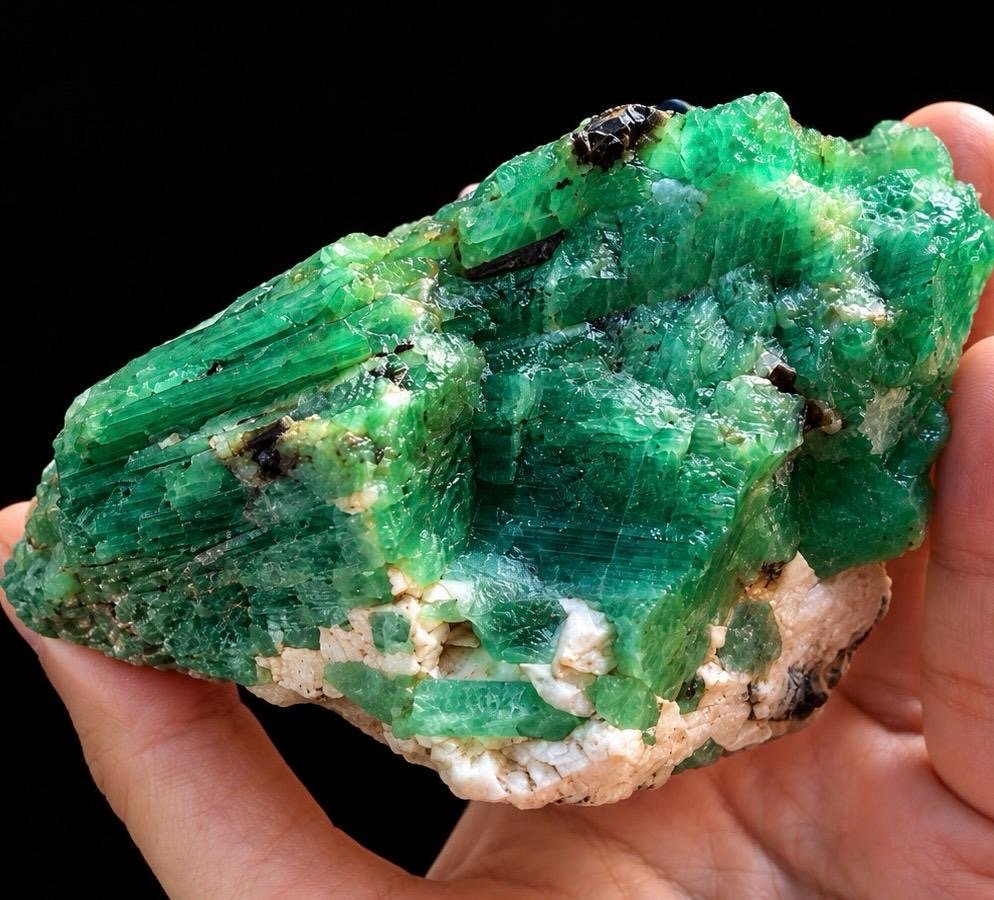
Emerald formation requires an unusual combination of geological conditions and chemical elements. Beryllium must come together with other elements under specific conditions over geological periods of time.
This rarity of formation is one reason fine natural emeralds are so highly valued. Every rough specimen begins as a product of Earth’s geological history before cutting reveals the material that can become a finished gemstone.
COLOUR, CLARITY & CHARACTER
When evaluating an emerald, colour is one of the most important considerations. A beautiful emerald can display remarkable depth and saturation, while its transparency, inclusions, cut and overall appearance contribute to its character.
Unlike some gemstones where exceptional clarity is the primary goal, emeralds are naturally more likely to contain inclusions. Their beauty is often understood through the balance of colour, transparency, inclusions and overall quality.
EMERALD IN ASTROLOGY
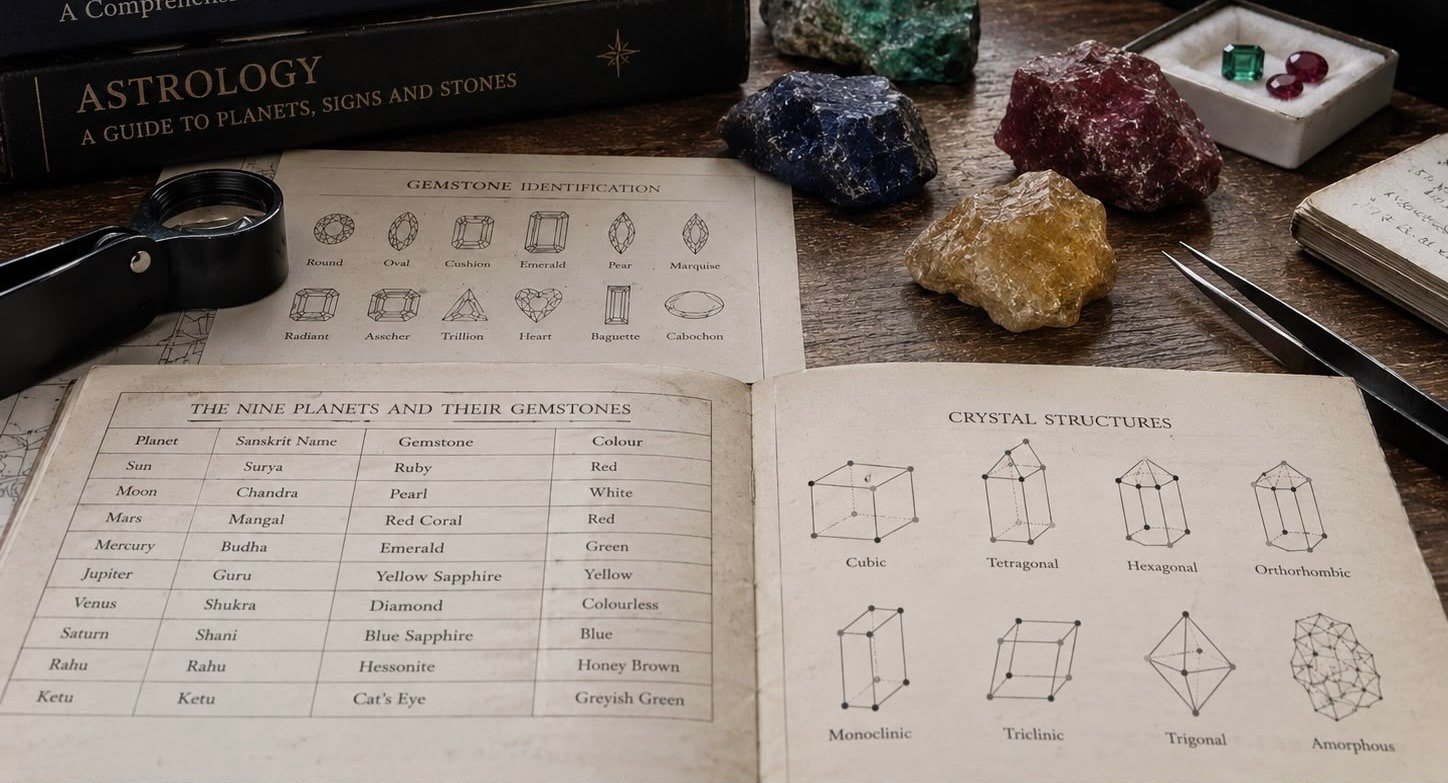
Emerald also has a long-standing place in Indian astrological tradition. In Vedic astrology, it is traditionally associated with Mercury (Budha) and is symbolically connected with qualities such as communication, intellect and learning.
These associations belong to astrological and cultural tradition rather than established scientific evidence. Modern gemology can explain an emerald’s chemical composition, crystal structure, colour and physical properties, while astrology provides a traditional symbolic interpretation.
A GEMSTONE FORMED BY NATURE
From the chemistry within its crystal to the inclusions created during its formation, every natural emerald carries evidence of a geological journey that began long before it became a gemstone.
That is perhaps what makes emerald so captivating: its beauty is not only seen on the surface—it is written within the stone itself.
At Crystale & Carat, we explore the world of natural gemstones through their science, history, craftsmanship and enduring cultural significance.
An emerald is more than green. It is a fragment of geological time, transformed into a gemstone of enduring beauty.