By Priyanka Rathore / 29 Sep, 2026
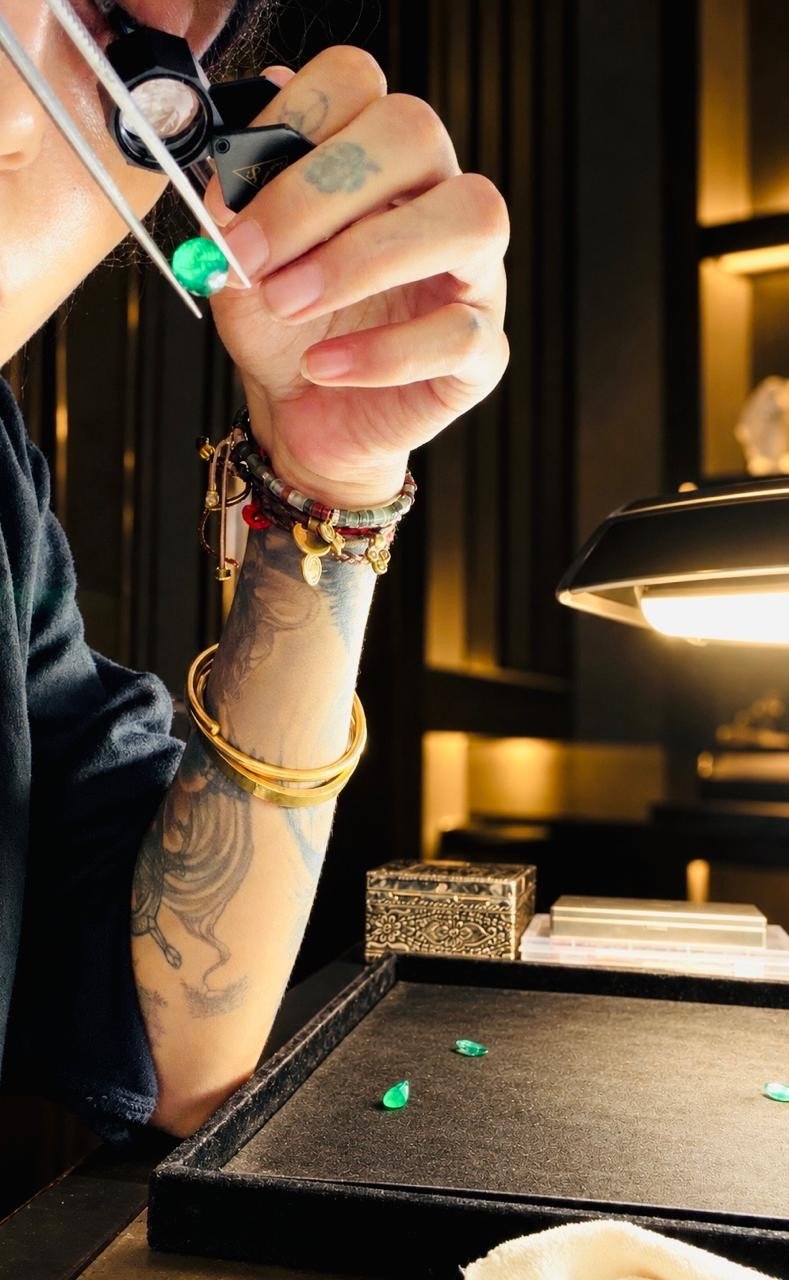
THE JOURNEY OF A GEMSTONE
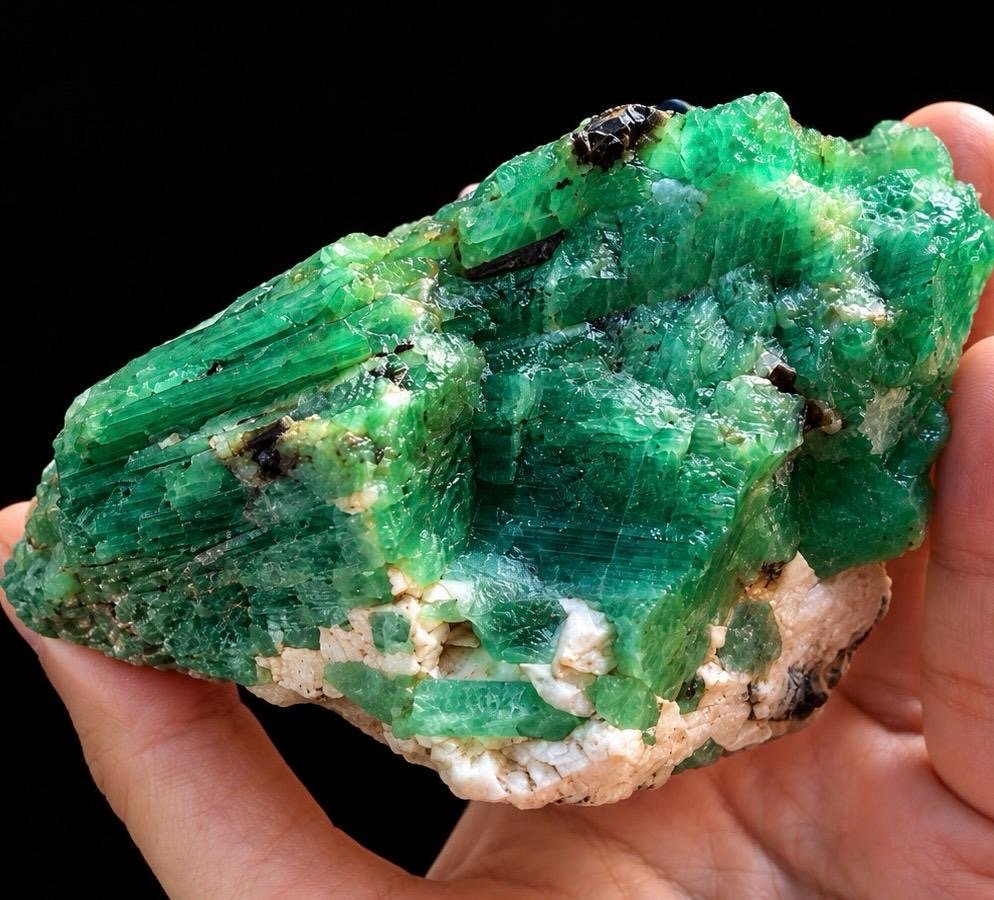
A gemstone begins its life beneath the earth, shaped by time, pressure, minerals and geological change.
But its journey doesn’t necessarily end when it is discovered.
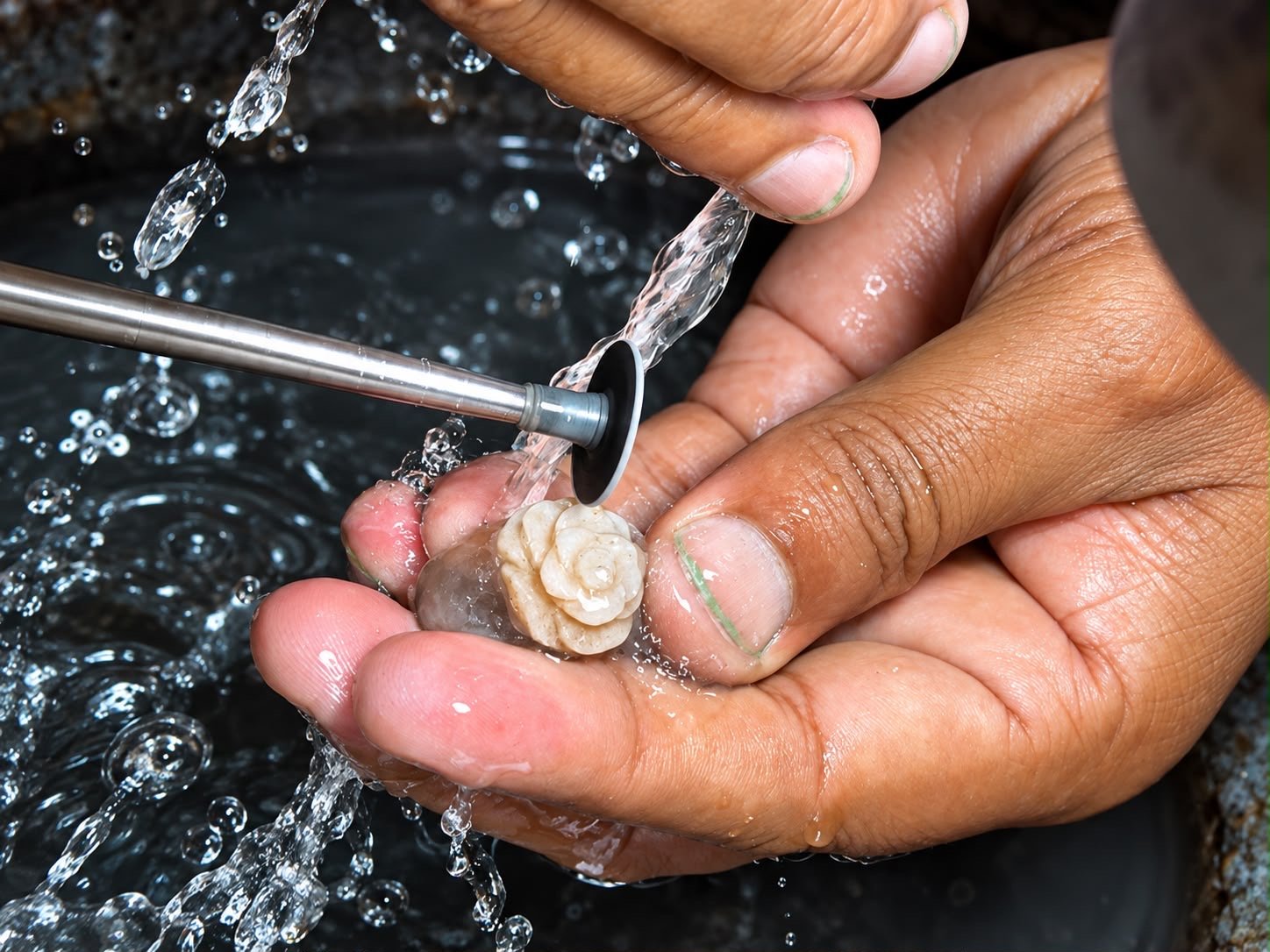
Between the rough stone and the finished gem, there may be another stage — one shaped by human knowledge and careful technique. Colour can be enhanced. Clarity can be improved. Certain characteristics can be softened or brought forward.
These processes are known as gemstone treatments.
They are part of the modern gemstone world, yet they are often misunderstood.
A treated gemstone isn’t simply a “lesser” gemstone. And the word natural doesn’t automatically mean untreated. To understand a stone properly, it’s important to look beyond its appearance and understand the journey that brought it there.
WHEN NATURE MEETS CRAFT
Every natural gemstone begins with its own character.
Some emerge with remarkable colour and clarity. Others contain fractures, inclusions or uneven colour that formed naturally as the stone grew.
Treatment can sometimes be used to refine these characteristics.
The purpose may be to improve colour, enhance apparent clarity or create a more desirable visual result. The methods vary considerably depending on the gemstone and the material being worked with.
What matters isn’t simply whether a stone has been treated.
It’s how, why and to what extent.
THE TRANSFORMATION OF COLOUR
Colour is one of the first things we notice in a gemstone.
It’s also one of the characteristics that can sometimes be influenced through treatment.
Heat treatment, for example, can alter or intensify colour in certain gemstones. It’s particularly encountered in varieties such as ruby and sapphire.
The result can be a gemstone with a stronger or more desirable appearance while retaining its natural mineral identity.
This distinction is important.
A gemstone can be natural in origin and treated in appearance.
The two descriptions aren’t contradictory.
THE QUIET ART OF EMERALD CLARITY
Emeralds offer one of the most familiar examples of gemstone enhancement.
Natural emeralds frequently contain internal features and fractures formed during their growth. Some emeralds are therefore clarity-enhanced using oils or other filling substances to make certain surface-reaching fractures less apparent.
This practice has a long history within the emerald trade.
Yet emerald enhancement isn’t simply a matter of making a stone “clearer”.
Different materials can behave differently, and the stability of a treated stone can influence how it should be handled and cared for.
Understanding the treatment therefore becomes part of understanding the emerald itself.
WHEN COLOUR ENTERS THE STONE
Some treatments go further than refining what is already present.
Diffusion can introduce colour into portions of a gemstone’s structure through a controlled process, while dyeing can add colour to certain gem materials.
These techniques can produce striking visual results.
But the appearance of a gemstone alone can’t always reveal how that colour was achieved.
A stone may look entirely convincing to the naked eye while its history remains invisible without appropriate examination.
That’s why knowledge matters.
NATURAL. TREATED. SYNTHETIC. SIMULANT.
These words are often used together, although they describe very different things.
Natural refers to a gemstone that formed naturally.
Treated refers to a gemstone that has undergone a process intended to alter or enhance one or more of its characteristics.
Synthetic or laboratory-grown refers to material produced by humans that can have essentially the same chemical composition and crystal structure as its natural counterpart.
A simulant, meanwhile, is a different material used to imitate the appearance of another gemstone.
Knowing the difference allows you to understand exactly what you’re looking at rather than relying solely on colour, brilliance or appearance.
WHAT SHOULD YOU ASK BEFORE BUYING?
A beautiful gemstone deserves more than a beautiful description.
When you’re considering an important stone, it’s worth asking:
* Is the gemstone natural or laboratory-grown?
* Has it undergone any treatment?
* What type of treatment has been used?
* How does the treatment affect the stone’s care or durability?
* Is the treatment disclosed?
* Is there an independent laboratory report?
These questions become particularly relevant when purchasing a valuable or rare gemstone.
A laboratory report can provide information that can’t reliably be established simply by looking at a stone, helping create a clearer understanding of its identity and detectable characteristics.
TRANSPARENCY IS PART OF BEAUTY
* There is something special about knowing a gemstone honestly.
* Knowing where its colour comes from.
* Understanding the characteristics within it.
* Knowing whether human intervention has played a part in its appearance.
* Treatment doesn’t erase the geological story of a natural gemstone. Instead, it becomes another chapter in its journey.
For Crystale & Carat, the beauty of a gemstone lies not only in what catches the light, but in what lies beneath it — its origin, its character, its individuality and the craftsmanship that brings it forward.
Because true appreciation begins when we look beyond the surface.
And sometimes, the most interesting part of a gemstone is the story you cannot see at first glance.